Homeowner guide
Decluttering before you sell
Clearing out before you sell makes photos, viewings and moving day easier, and most of what you are not taking can be sold, given away or recycled rather than skipped. Here is how to work through it.
Last reviewed September 2026
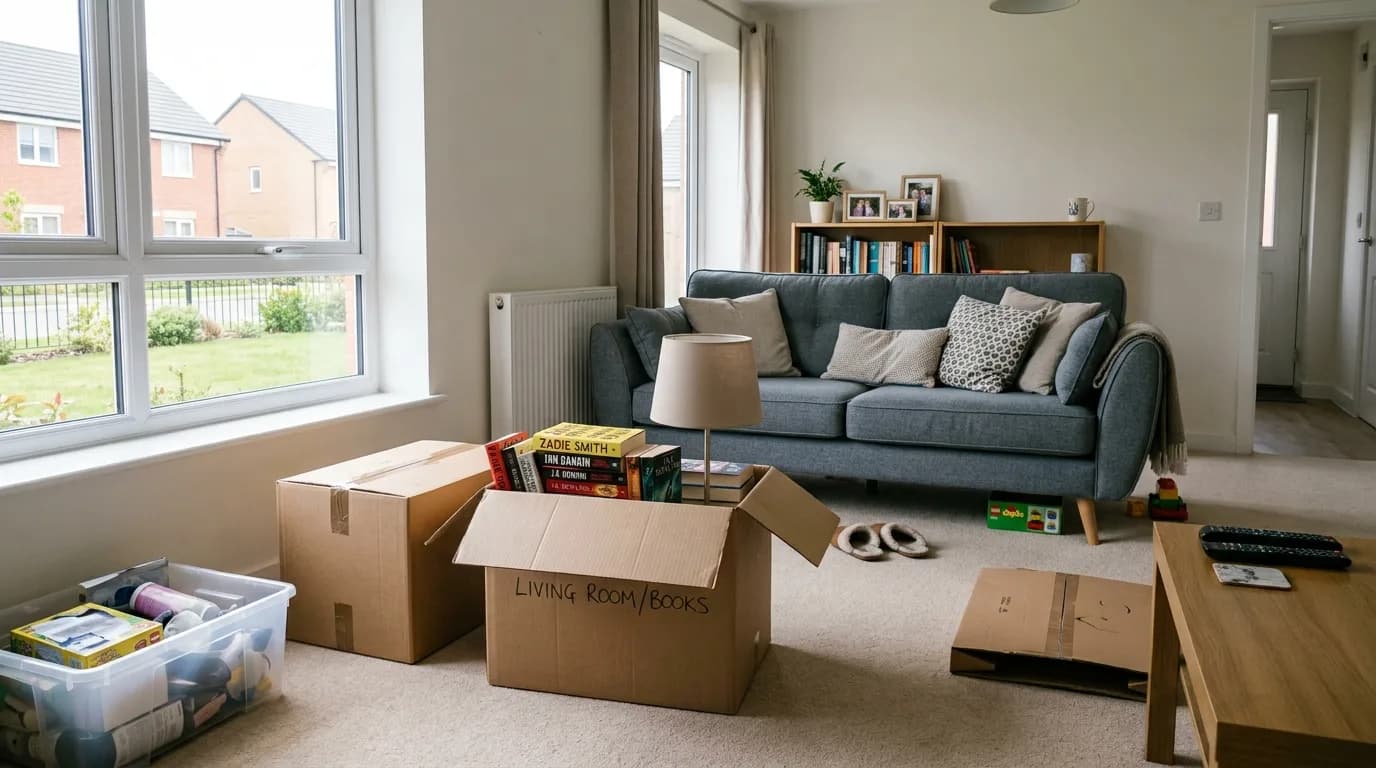
Clearing out the things you are not taking with you, before the house goes on the market and before you move, takes the stress out of photography, viewings and completion. It is also a chance to recover a bit of money and keep a lot of usable stuff out of a skip.
This guide works through it in order: where to start, what is worth selling, the one rule that decides whether furniture can be sold or donated at all, and how to handle appliances, hazardous odds and ends, and whatever is left. It is written for anyone selling or moving out of a home.
Why sort it out before you sell, not after?
Clutter works against you at every stage of a sale. It makes rooms photograph smaller and busier, it distracts buyers at viewings, and left to the end it turns moving day into a scramble. Sorting early, while there is still time to sell and donate rather than bin, is what keeps the whole thing calm.
It also takes longer than people expect. A loft, a garage or years of kitchen cupboards do not clear in an afternoon, and the good routes, selling, donating and recycling, all need a little lead time. Starting a few weeks out, one room at a time, is far easier than facing it all the week before completion.
The method
Where do I actually start?
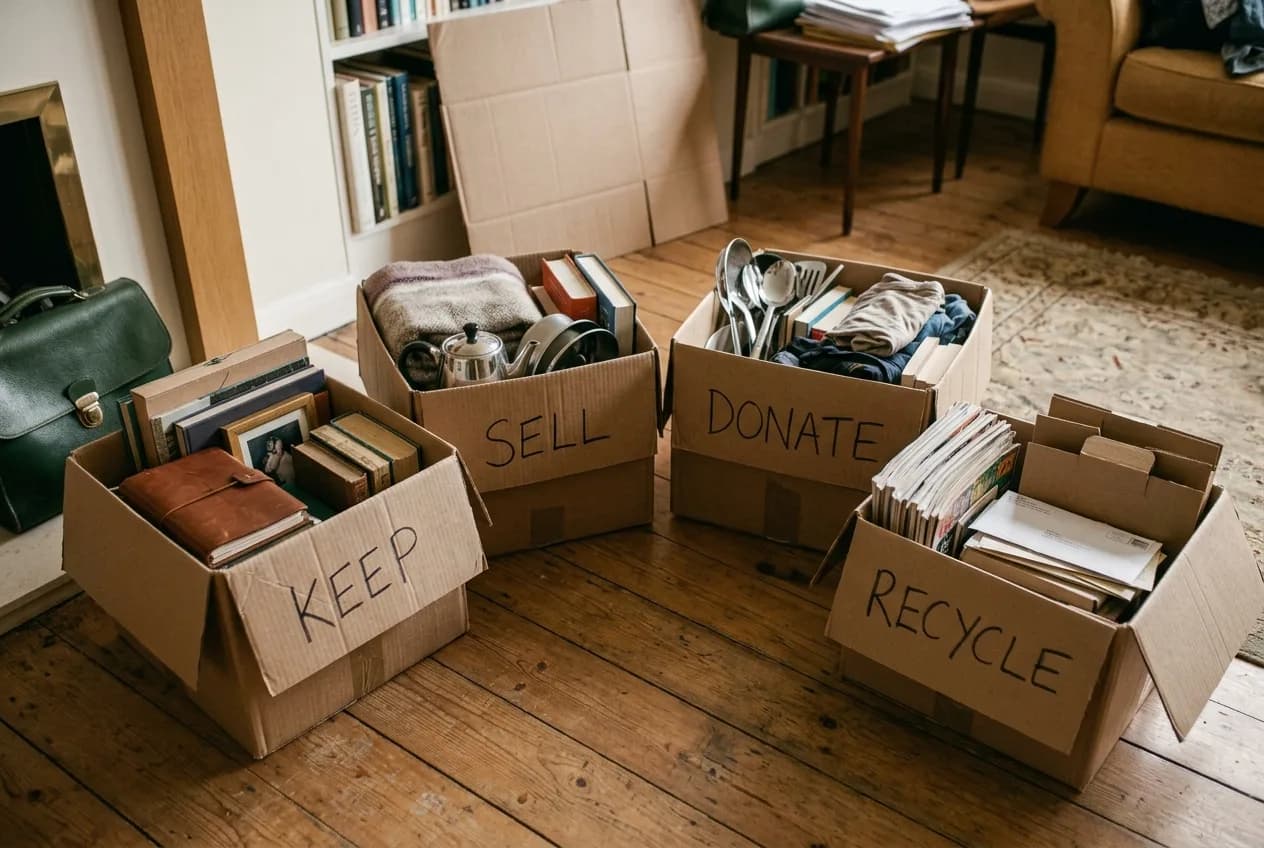
The simplest approach is one room at a time, sorting as you go into a small number of groups rather than agonising over each item. Most people find five is enough: keep, sell, donate, recycle, and dispose. Boxes or bags labelled for each, and a rule that everything goes into one of them, keeps it moving.
Start with the easy wins, the loft, the garage, the spare room, where nothing is in daily use, and leave the kitchen and everyday cupboards until nearer the move. Be honest about the keep pile, too. If you are moving somewhere smaller, the things that will not fit are better sold or donated now than paid for twice, once to move and once to store.
Room by room
How do I tackle it room by room?
Once you have the method, each room throws up its own decisions. A quick run through the usual ones saves a lot of standing about wondering what to do with a particular thing.
- Loft and garage
- The forgotten corners, and often the most sellable. Tools, bikes, camping and sports kit, and furniture in storage tend to have real resale value, while scrap metal and old cabling can go to a scrap recycler. The heavy, awkward things hide here too, so starting early leaves time to sell rather than skip.
- Wardrobes and clothes
- Clothes and textiles clear out fast and have several routes. Good pieces sell on apps like Vinted or eBay, charity shops take clean, wearable clothing, and worn-out textiles that no charity will take should still go to a textile bank rather than the bin, because even damaged fabric is recycled. The Recycle Now locator finds your nearest textile bank.
- Kitchen
- Duplicate gadgets, chipped crockery and the appliances at the back of the cupboard. Working small appliances sell or donate, and out-of-date food is composted or binned as appropriate. Leave the everyday kit until nearer the move so you can still cook in the meantime.
- Bathroom cabinet
- Out-of-date or unwanted medicines should go back to a pharmacy, which disposes of them safely, rather than in the bin or down the toilet. Unopened, in-date toiletries can go to a charity or a food bank.
- Paperwork and documents
- Years of paper build up. Keep the essentials, pass the house-related papers, warranties and manuals to the buyer, and shred anything with personal or financial details before recycling it, since old bank statements and bills are a gift to identity fraudsters. The rest is ordinary paper recycling.
The opportunity
What is worth selling, and how?
It is easy to underestimate how much of a house clear-out is worth something to someone else, and selling the better items can fund part of the move. How you move each thing on mostly comes down to whether you want a bit of money for it or simply want it gone.
- Sell it
- For anything with value left, a local listing usually sells fastest because the buyer collects: Facebook Marketplace and Nextdoor reach people nearby, while Gumtree and eBay cast a wider net. In person, a car boot sale or a garage sale clears smaller bits quickly, and better furniture, antiques or collectables can be worth a local auction house or a second-hand dealer, which often pay more than you would expect.
- Give it away free
- To clear usable things fast without the effort of selling, Freecycle and Freegle rehome items locally, often within a day, as do the free-listing sections of Facebook Marketplace and Nextdoor. Trash Nothing pulls several of these local groups together in one place.
- Donate it
- Charity shops take clothes, books, kitchenware and bric-a-brac in good condition, and the British Heart Foundation collects larger furniture and electrical items free of charge. Working electricals, and an intact fire label on any upholstered furniture, are conditions of donation, which is covered next.
- Recycle it
- What no one will take is recycled by material. Clothes and textiles go to textile banks, metal to a scrap recycler, and the Recycle Now locator, run by the charity WRAP, finds the nearest point for almost anything else.
The rule to know
Can I sell or give away my old sofa, mattress or armchair?
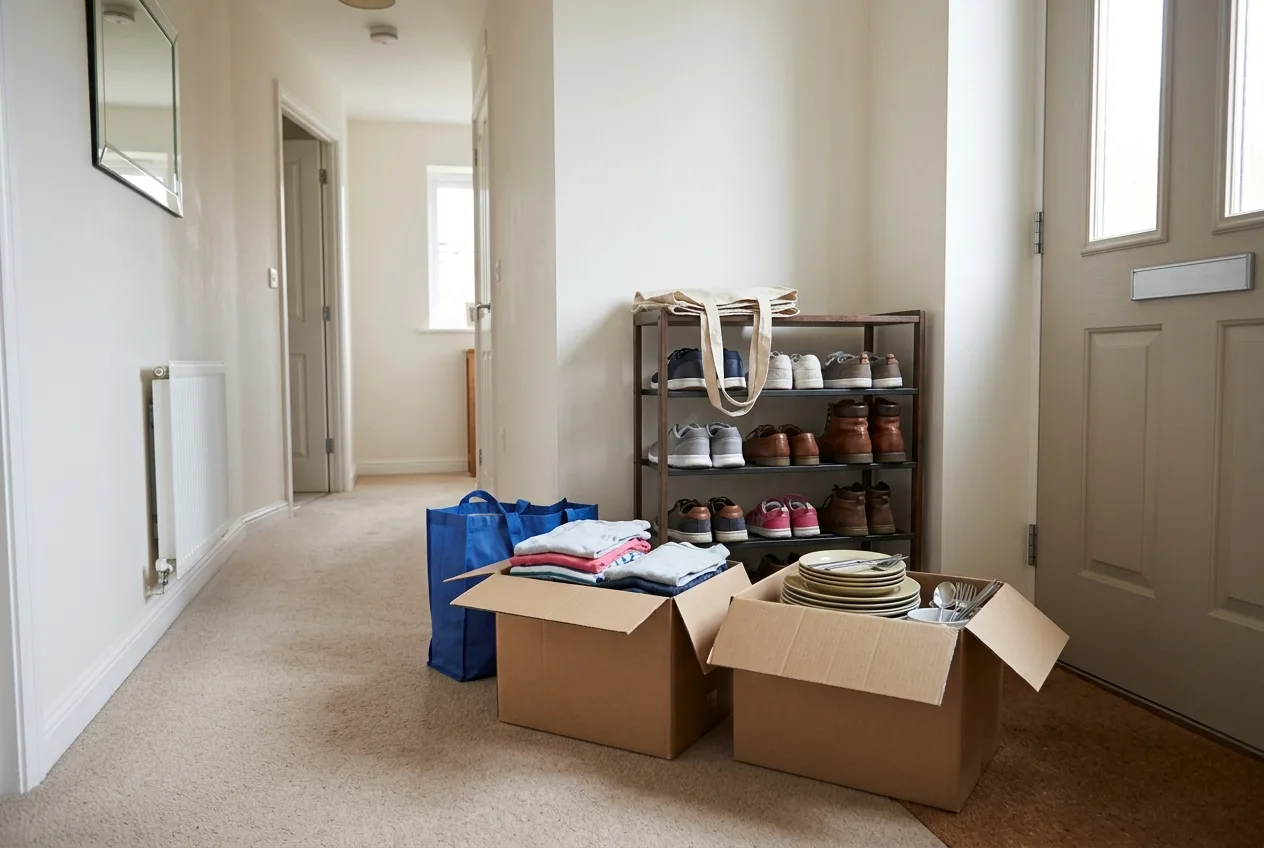
This is the one rule that catches people out, so it is worth knowing before you try to move furniture on. Upholstered furniture and mattresses, the padded, fabric-covered things like sofas, armchairs, padded dining chairs, beds, divans and mattresses, have to carry a permanent fire-safety label under the Furniture and Furnishings (Fire) (Safety) Regulations 1988. The Chartered Trading Standards Institute guidance is clear that the same standard applies to used furniture as to new, so the label matters just as much second-hand.
The practical effect is about who is allowed to take it. The ban on supplying unlabelled upholstered furniture applies to businesses, dealers, auctioneers and charities, which is exactly why a charity like the British Heart Foundation will not accept an upholstered item unless the fire label is present, intact and legible. A genuine one-off private sale of your own furniture is not caught by that offence, but in practice most buyers, and every charity or dealer, will want the label, so an item without one is effectively unsellable through those routes. Furniture made before 1950 sits outside the rules.
So the simple version: if you want to sell or donate a sofa, mattress or armchair, keep its fire label attached and readable. If the label is gone, or the piece is home-made or genuinely old, the realistic route is a household waste recycling centre rather than resale.
Electricals
What do I do with old appliances, TVs and electricals?
Electrical and electronic items, from a kettle to a washing machine, should not go in the general bin, which is what the crossed-out wheelie-bin symbol on them means, as Recycle Now explains. They are covered by separate rules designed to keep them out of landfill and recover the materials.
The easiest route when you are replacing something is the retailer. Under the WEEE regulations, shops must offer free take-back of your old item when you buy a like-for-like replacement, and larger stores must accept small electricals for free even without a purchase. Otherwise, household waste recycling centres take electricals separately.
Fridges and freezers are the exception that needs care. They contain refrigerant gases and have to be handled at a specialist facility, so they cannot go in a skip or the general waste. Recycling centres take them in a separate refrigeration area, and many councils and retailers will collect them. Anything still working is worth selling or donating first.
The awkward leftovers
What about paint, batteries and other hazardous bits?
Clearing a house always turns up the awkward leftovers: half-tins of paint, cleaning products, garden and car chemicals, and old batteries. These count as household hazardous waste, and they must not go in your normal rubbish or recycling bins. The right route is a household waste recycling centre hazardous point, or your council collection, which the Recycle Now locator and your council website will point you to.
Two are worth calling out. Loose batteries are a genuine fire risk in bins and bin lorries, so they belong in the battery drop-off points found in most supermarkets and DIY stores, not the bin. And leftover paint has its own routes depending on whether it is water-based or solvent-based, which we cover in the guide to disposing of paint.
A good handover
What should I leave for the new owner?
Part of clearing a house is deciding what not to take. A small, thoughtful handover leaves a good final impression and saves the buyer chasing you after completion.
The genuinely useful things to leave behind are the manuals and warranties for the boiler, appliances and anything fitted, the instructions for the alarm and heating, spare keys and fobs, and a quick note of the bin days and which bin is which. A little of the wall paint, labelled by room, is always appreciated for touch-ups. And anything you have agreed to leave as part of the sale, white goods, curtains or garden furniture, should match the fixtures and fittings form so there are no surprises on moving day.
Rules vary by area
What a recycling centre accepts, how it handles electricals and hazardous waste, and whether your council collects bulky or hazardous items from the kerb all vary by area. Some centres ask you to book a slot, or limit certain materials.
Check your own council website and local recycling centre for the rules where you are, or use the Recycle Now locator to find the nearest point for a specific item, before you load up.
How do I clear what is left before completion?
Once the keep, sell, donate and recycle piles are dealt with, what remains is usually a mix of genuinely finished items that need clearing, often against a completion date. There are a few ways to do it. A skip suits a bigger clear-out where you can load it over a few days and have somewhere to put it. For smaller amounts, a few trips to the recycling centre may be enough, and if you cannot load a skip or have nowhere for one, a licensed waste carrier or a man-and-van clearance does the work for you, which our guide to skip hire for house clearance weighs up.
If you do use a skip and it needs to sit on a public road rather than your own driveway, you will need a permit from the council first. A skip entirely on your own drive does not need one. Whoever ends up clearing the waste, it is worth using a licensed carrier so you know it is disposed of properly.
Before you start
Declutter-before-you-sell checklist
- Start a few weeks out and work one room at a time, sorting into keep, sell, donate, recycle and dispose.
- List the better items for sale early, on local marketplaces, at a car boot, or through an auction house for anything valuable.
- Keep the fire-safety label attached on any sofa, mattress or armchair you want to sell or donate. No label usually means the recycling centre.
- Book a charity collection for good-condition furniture and working electricals, and give the rest away locally rather than binning it.
- Take electricals to a recycling centre or use retailer take-back when you buy a replacement. Fridges and freezers need the separate refrigeration route.
- Set aside paint, chemicals and batteries for the hazardous-waste point, and never put loose batteries in a bin.
- Shred anything with personal or financial details before recycling it, and return unwanted medicines to a pharmacy.
- Leave the manuals, warranties, spare keys and a note of the bin days for the new owner.
- For what is genuinely left, decide between recycling-centre runs, a licensed carrier or a skip, and check whether a skip needs a road permit.
Where this comes from
Sources
- Chartered Trading Standards Institute: second-hand upholstered furniture fire safety · checked September 2026
- Furniture and Furnishings (Fire) (Safety) Regulations 1988 (legislation.gov.uk) · checked September 2026
- GOV.UK: WEEE regulations (electrical waste) · checked September 2026
- Recycle Now recycling locator (WRAP) · checked September 2026
- British Heart Foundation: book a furniture collection · checked September 2026
- Freecycle · checked September 2026
- Freegle · checked September 2026
- GOV.UK: apply for a skip permit · checked September 2026
Common questions
Frequently asked
Can I sell a sofa without a fire label?
Not through a shop, dealer or charity. The ban on supplying unlabelled upholstered furniture applies to businesses and charities, so they will refuse it. A genuine one-off private sale between individuals is not caught by that offence, but most buyers still want the label, so an unlabelled sofa usually ends up at the recycling centre. Furniture made before 1950 is exempt.
Can I put an old kettle or toaster in the bin?
No. Electricals should not go in general waste, which is what the crossed-out wheelie-bin symbol means. Use retailer take-back when you buy a replacement, or take them to a recycling centre. Larger shops have to accept small electricals for free.
How do I get rid of an old fridge or freezer?
Not in a skip or the general waste. Fridges and freezers contain refrigerant gases and need specialist handling, so use the recycling centre refrigeration area, or a council or retailer collection. If it still works, selling or donating it is better still.
What do I do with leftover paint and chemicals?
Household hazardous waste like paint, chemicals and batteries must not go in normal bins. Take them to a recycling centre hazardous point or use your council collection, and put loose batteries in a shop drop-off point rather than the bin.